- Details
- Description
-
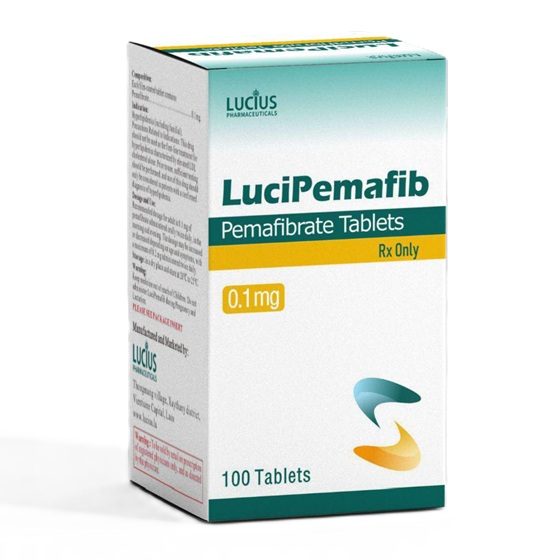
Packaging Size100t/bottle
-
Strength0.1mg
-
CompositonPemafibrate
-
TreatmentHypertriglyceridemia
-
FormTablet
-
BrandLuciPema
-
Quantity Unit0.1mg*100t/Box
-
ManufacturerLucius Pharmaceuticals (Lao) Co.,Ltd
About Pemafibrate
Pemafibrate is a peroxisome proliferator-activated receptor alpha (PPARα) agonist. Pemafibrate lowers triglycerides by suppressing triglyceride synthesis in the liver and increasing the activity of lipoprotein lipase (LPL). Pemafibrate's primary indication is for the treatment of hypertriglyceridemia, but it has also shown promise in improving overall lipid profiles and reducing cardiovascular risks.
Dosage and Administration
Adults: 0.1 mg twice daily, morning and evening.
The dosage may be adjusted according to age and symptoms, but the maximum dose is 0.2 mg twice daily.
Sustained-release tablets: Depending on the degree of triglyceride elevation, administer 0.2 mg or 0.4 mg once daily.
Precautions
1. A dietary therapy should be implemented beforehand as the basis for the treatment of hyperlipidemia. Exercise therapy and mitigation of risk factors for ischemic heart disease, such as hypertension and smoking, should also be considered.
2. Serum lipid levels should be monitored regularly during treatment. If no therapeutic effect is observed, discontinue use.
3. This medication may affect liver function and liver function test results; therefore, regular liver function tests are necessary during treatment.
4. Since low-density lipoprotein cholesterol (LDL-cholesterol) levels may increase during treatment, LDL-cholesterol levels should be monitored regularly.
Side effects
1. Rhabdomyolysis (frequency unknown): Rhabdomyolysis may occur, characterized by muscle pain, weakness, elevated creatine kinase (CK), and elevated myoglobin in the blood and urine. Severe kidney damage, such as acute kidney injury, may follow. Therefore, in such cases, medication should be discontinued immediately and appropriate treatment should be administered.
2. Liver dysfunction, jaundice (frequency unknown): Elevated alanine aminotransferase (ALT), gallstones, abnormal liver function, elevated aspartate aminotransferase (AST).
3. Muscle-related: Elevated creatine kinase (CK), muscle pain, increased myoglobin in the blood.
4. Skin-related: Rash, itching.
5. Other-related: Diabetes (including worsening of the condition), increased glycated hemoglobin, increased low-density lipoprotein, increased uric acid in the blood.
6. Large clinical studies (PROMINENT trial) showed an increased incidence of venous thromboembolism and adverse renal events in the pemafibrate group. Although the absolute risk is not high, caution is still warranted.
Contraindications
1. Patients with a history of allergy to any component of this drug.
2. Patients with severe liver damage, Child-Pugh stage B or C cirrhosis, or biliary obstruction.
3. Patients with gallstones (with reported gallstone formation).
4. Pregnant women or women who may become pregnant.
5. Patients currently using cyclosporine or rifampin.